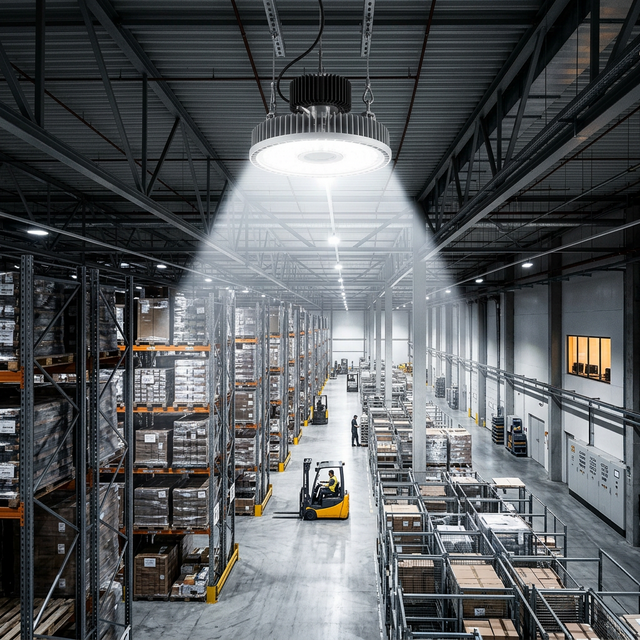




For B2B buyers, lighting is not just a decorative extra. It is an operating decision.
In offices, retail stores, hospitality spaces, commercial buildings, fit-outs, and large-scale projects, lighting affects energy use, maintenance schedules, visual consistency, and total cost of ownership. That is why more business buyers are moving away from the old mindset of choosing between “premium but expensive” and “cheap but risky.”
Today, the smarter question is simpler: which lighting solution gives the best business value?
Upfront price is only part of the cost.
A low purchase price can look attractive during procurement, but it rarely tells the full story. For commercial buyers, the real cost of lighting includes electricity consumption, replacement frequency, maintenance effort, and how reliably the product performs over time. If a lower-cost product uses more energy, loses output too quickly, or creates avoidable replacement cycles, the initial savings disappear fast.
That is one reason LED has become the default direction for serious buyers. LED lighting is widely recognized for its energy efficiency, long life, and durability compared with older lighting technologies. For B2B environments, that means an opportunity to reduce long-term operating costs while maintaining strong performance.
Efficiency matters even more at scale.
A single bulb may not seem significant, but across dozens, hundreds, or thousands of fixtures, energy use becomes a meaningful operational issue. For developers, contractors, facilities teams, and procurement managers, lighting efficiency is no longer just a technical feature. It is a financial lever.
This is also why buyers should think in lumens, not just watts. Watts show how much energy a product uses. Lumens show how much light it produces. In practical terms, businesses should not just ask how much power a product consumes. They should ask how much useful brightness they are getting for that power.
Reliability also protects brand standards.
For B2B customers, lighting quality is not only about illumination. It is about consistency. In a retail environment, poor lighting can reduce product appeal. In hospitality, it can weaken ambience. In an office or commercial project, it can affect perceived quality. In all of these cases, lighting that fades, overheats, or becomes inconsistent creates friction that businesses eventually pay for.
Thermal management is especially important in LED performance. When heat is not controlled well, output can degrade faster and product life can be reduced. For a business buyer, that matters because failure is not always dramatic. Sometimes the product still works, but the output weakens, the look becomes uneven, and the space no longer feels as clean or premium as intended.
The market itself is also changing.
For years, many buyers assumed that strong lighting performance only came from high-priced legacy brands. That assumption is becoming less reliable. As LED technology matures, newer suppliers are entering the market with a different proposition: deliver credible output, stronger efficiency, and dependable build quality without the traditional premium markup.
That shift is important for B2B procurement because it creates more room to optimize value. Buyers are no longer limited to choosing between prestige pricing and uncertain quality. They can compare products more rationally through specifications, energy performance, reliability, and long-term operating logic.
One example of this newer value-focused category is MOBASCH lighting solutions.
What business buyers should evaluate
- Does the product deliver the required brightness for the application?
Brightness should be judged by lumens, not assumptions tied only to wattage. - Is the efficiency strong enough to matter over time?
At scale, lower energy use directly affects operating cost. - Is thermal management likely to support long-term performance?
Poor heat control can shorten useful life and reduce output quality. - Will the product support the visual standard of the space?
In B2B settings, lighting affects perception as much as function. - Does the supplier offer commercial value, not just a low invoice price?
The goal is not the cheapest unit. The goal is the smartest total return.
The new B2B lighting mindset is more disciplined, and that is good for the industry.
Instead of paying extra only for brand familiarity, or choosing low-cost products that create hidden operational problems, more companies are looking for a better balance of output, efficiency, reliability, and value. That is a healthier way to buy lighting.
The future of B2B lighting is not about choosing the most expensive option in the room. It is about choosing the option that performs well, scales efficiently, protects presentation quality, and makes commercial sense over time.
That is the real shift in the market, and for B2B buyers, it is a smart one.