

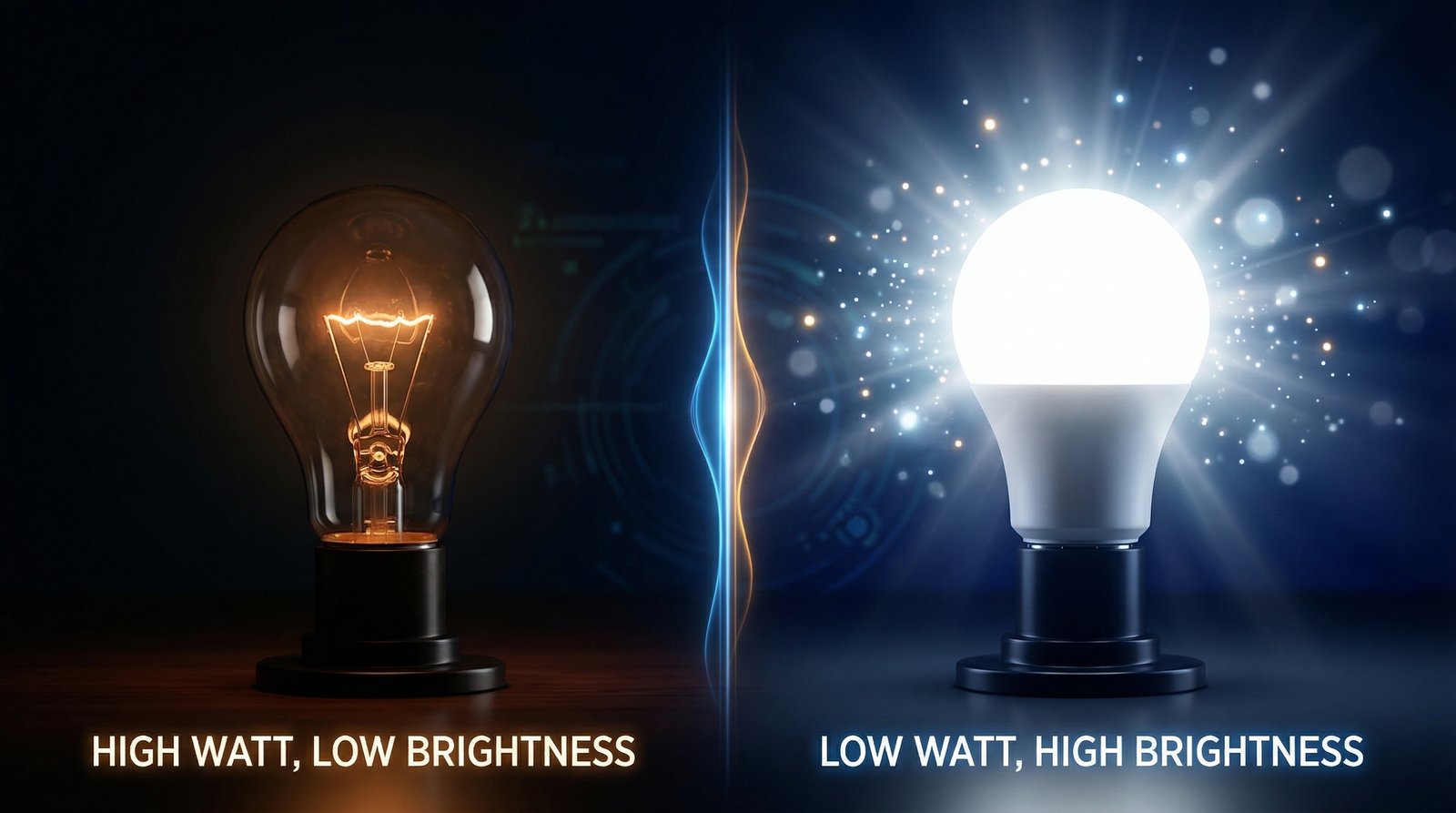

Most people still shop for light bulbs by wattage — asking for "a 60-watt bulb" or "a 100-watt equivalent." This habit made sense with incandescent bulbs, where wattage and brightness were directly linked. With LED technology, wattage and brightness are no longer the same thing. Here is what you need to know.
What Is Wattage?
Wattage (W) measures how much electrical power a bulb consumes. A 9W LED consumes 9 watts of electricity per hour. Lower wattage means lower energy use and lower electricity cost. Wattage tells you nothing about how bright the light is.
What Are Lumens?
Lumens (lm) measure the total amount of visible light emitted by a bulb. A higher lumen value means a brighter bulb. This is the number you should use when deciding if a bulb is bright enough for a room or application.
Wattage vs Lumens Comparison Table
| Old Incandescent | Approximate Lumens | LED Equivalent Wattage |
|---|---|---|
| 40W | ~450 lm | ~5–6W LED |
| 60W | ~800 lm | ~8–9W LED |
| 75W | ~1100 lm | ~10–12W LED |
| 100W | ~1600 lm | ~13–15W LED |
What Is Luminous Efficacy?
Luminous efficacy (lm/W) tells you how efficiently a bulb converts electricity into light. A bulb producing 810 lumens at 9W has an efficacy of 90 lm/W. A higher number means better efficiency — you get more light for less energy.
For reference: incandescent bulbs average around 10–15 lm/W. Modern LED bulbs achieve 80–120 lm/W. This is why switching to LED saves up to 85% on lighting energy costs.
How to Choose Lumens by Room in UAE Homes
- Bedroom: 200–400 lm per lamp (warm, relaxed light)
- Living Room: 400–800 lm per lamp depending on room size
- Kitchen / Office / Study: 800–1350 lm per lamp (task lighting)
- Warehouse / Workshop: 3000–5000+ lm per fixture
MOBASCH® Products by Lumen Output
- CLASSIC LED A60 BULB Core Series: 810–1350 lm (9W–15W) — ideal for home and office
- LED CANDLE BULB Decor Series: 720 lm (8W) — decorative fixtures
- HIGH-POWER LED T BULB: 3000–5000 lm (30–50W) — industrial and commercial
When shopping for LED bulbs, always check the lumen spec — not just the wattage. The goal is the right amount of useful light at the lowest possible energy cost.